Helping D2C founders start their day with WhatsApp reports
MY ROLE
Product Designer
TEAM
1 Product Designer (me), 1 PM, 3 Engineers
YEAR
Sep - Dec 2023
Project Summary
I helped Merito increase daily engagement by launching automated WhatsApp reports that replaced unreliable email reports.
This improved delivery rates from 70% on email to nearly 100% on WhatsApp, using the channel users were most comfortable with.
What started as a fix unexpectedly became one of Merito’s most loved features.
Problem statement
Getting users to open the platform every day without nudges is never easy. Daily email reports became our way to keep them updated on key metrics.
Brands relied on them for quick insights, but frequent bugs and delivery issues meant they often missed their morning updates… and kept our devs busy fixing them.
Email reports failed to send 70% of the time because of unprecedented issues.




THE USERS
Making daily reporting work for D2C founders and marketers
Merito’s target customers were D2C brands scaling from 0 → 1.
They needed quick, daily insights on higher-level metrics like sales, ROAS and CAC, without diving into data every now and then.

My role in the project
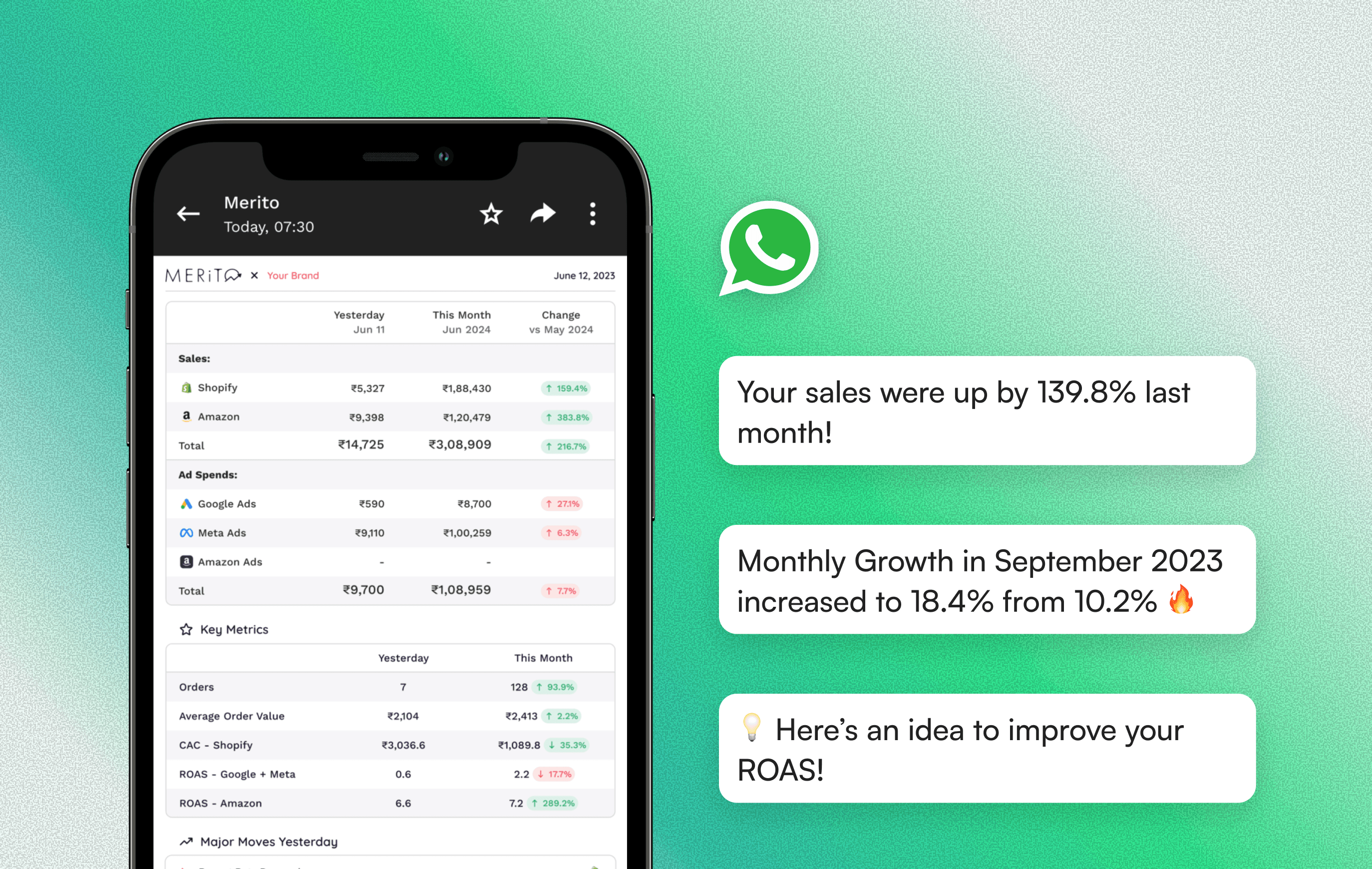
I worked with an engineer to design the WhatsApp message, tone and structure.
I studied Meta’s documentation and examples from other vendors to make our message format fit WhatsApp’s "utility" category.
CURRENT ISSUES
Buggy PDF reports
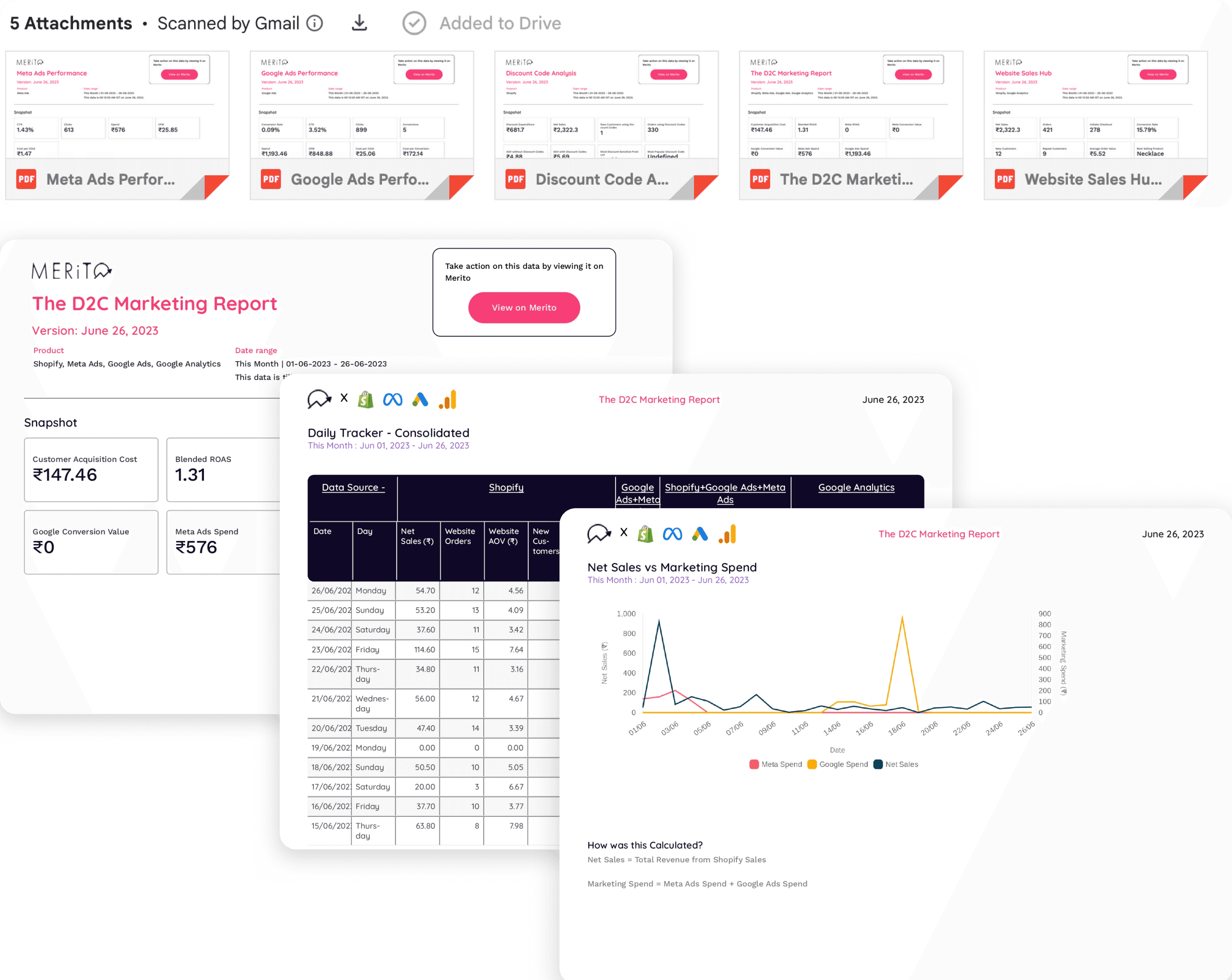
Merito’s data lived in workspaces, each with cards, charts and tables. Users could pin what mattered, and every morning they’d get a custom PDF report in their email inbox. If users hadn't pinned anything, Merito would send reports from all the five workspaces.
But the PDFs kept breaking. ReactPDF made debugging painful for devs and issues would pop up almost every second day. Even small visual changes needed a lot of development and testing.
Why WhatsApp?
We had a hunch that users checked WhatsApp more often than email, since founders usually responded faster to queries there.
If that was true, sending reports on WhatsApp could help us reach them faster.
The brief: Replace email reports with WhatsApp updates.
TECH CHECK
Can we really send reports over WhatsApp?
The first step was to check if we could send messages over WhatsApp.
We knew it was possible but assumed it was only for businesses. After some research, I found third-party vendors offering it and later confirmed we could build it in-house too.
We explored the Meta Cloud API, set up a few test messages, and they worked.
We could send custom images from the server to individual users.
Designing the reports
Design required two questions to be answered simultaneously:
#1
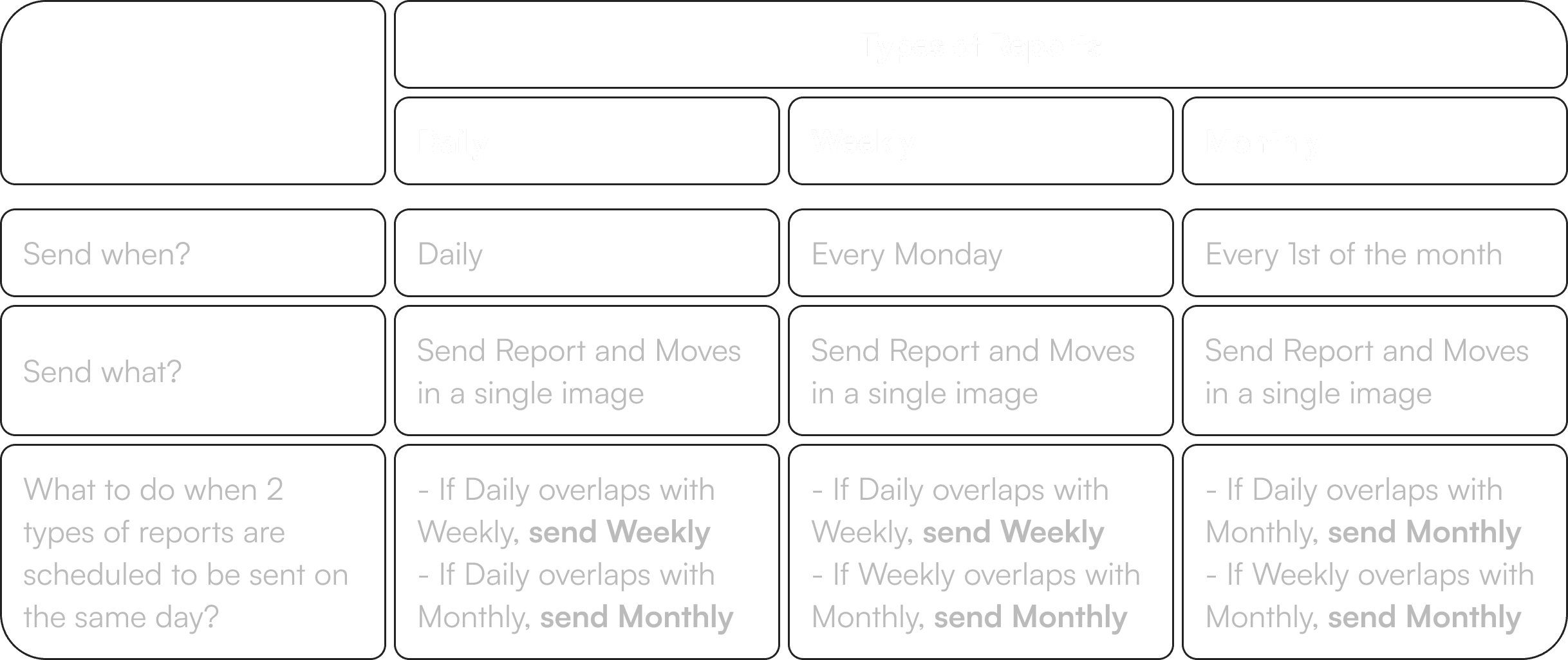
When to send the reports?
Brands cared about a fixed set of metrics. Showing them daily made sense, so we included data for yesterday, month-to-date and last month for the daily variant.
Later, we added weekly and monthly variants to increase value.
#2
What should be the format - text or image?
I checked how other tools sent reports.
Then tried tables, conversational text, short summaries, etc.
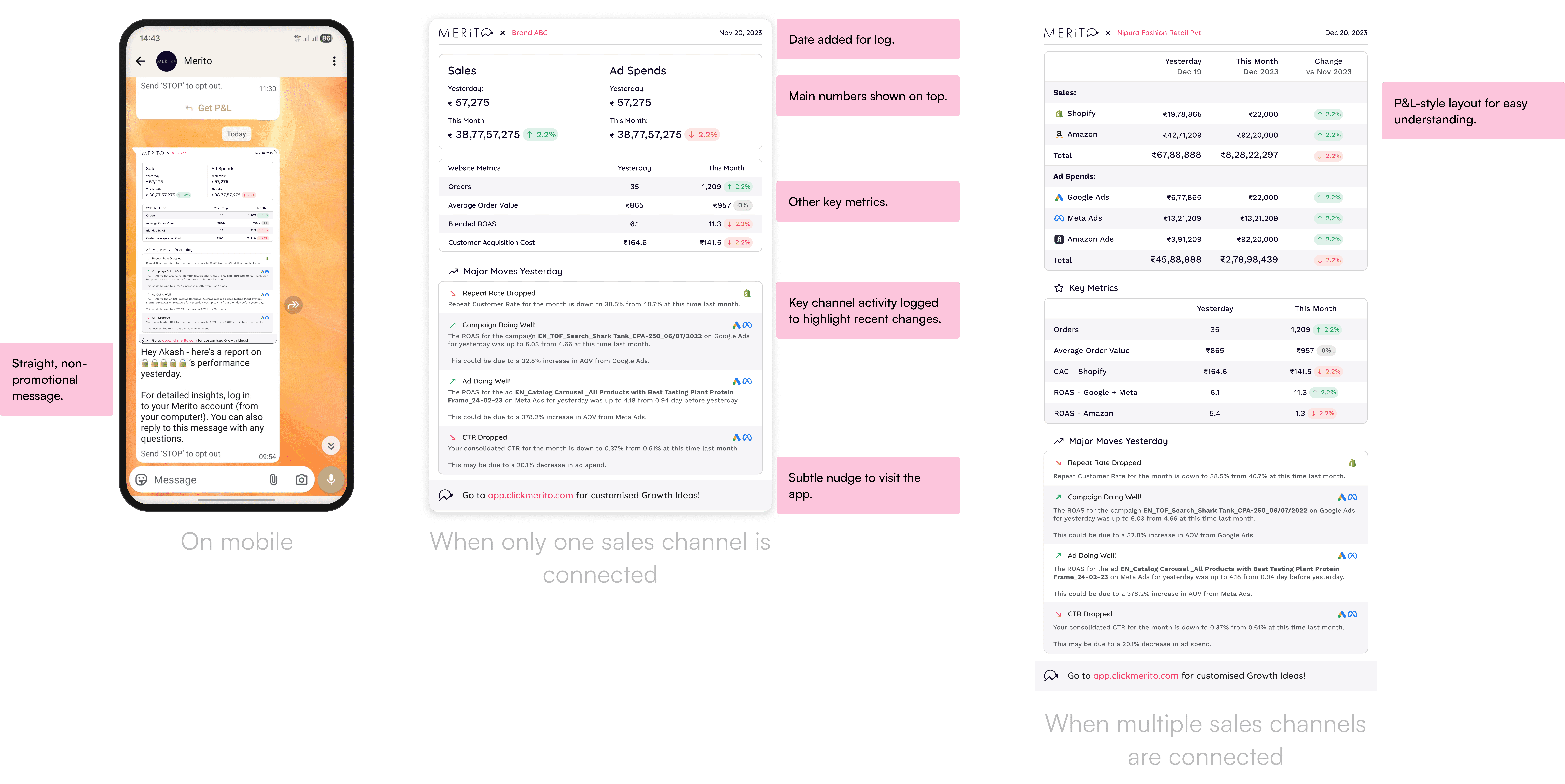
Text didn’t scale well and sometimes got flagged as marketing. So we chose dynamic images with a clean, date-based message.
We tested a few versions internally to make sure the layout stayed clean on both Android and iOS, especially on smaller screens.
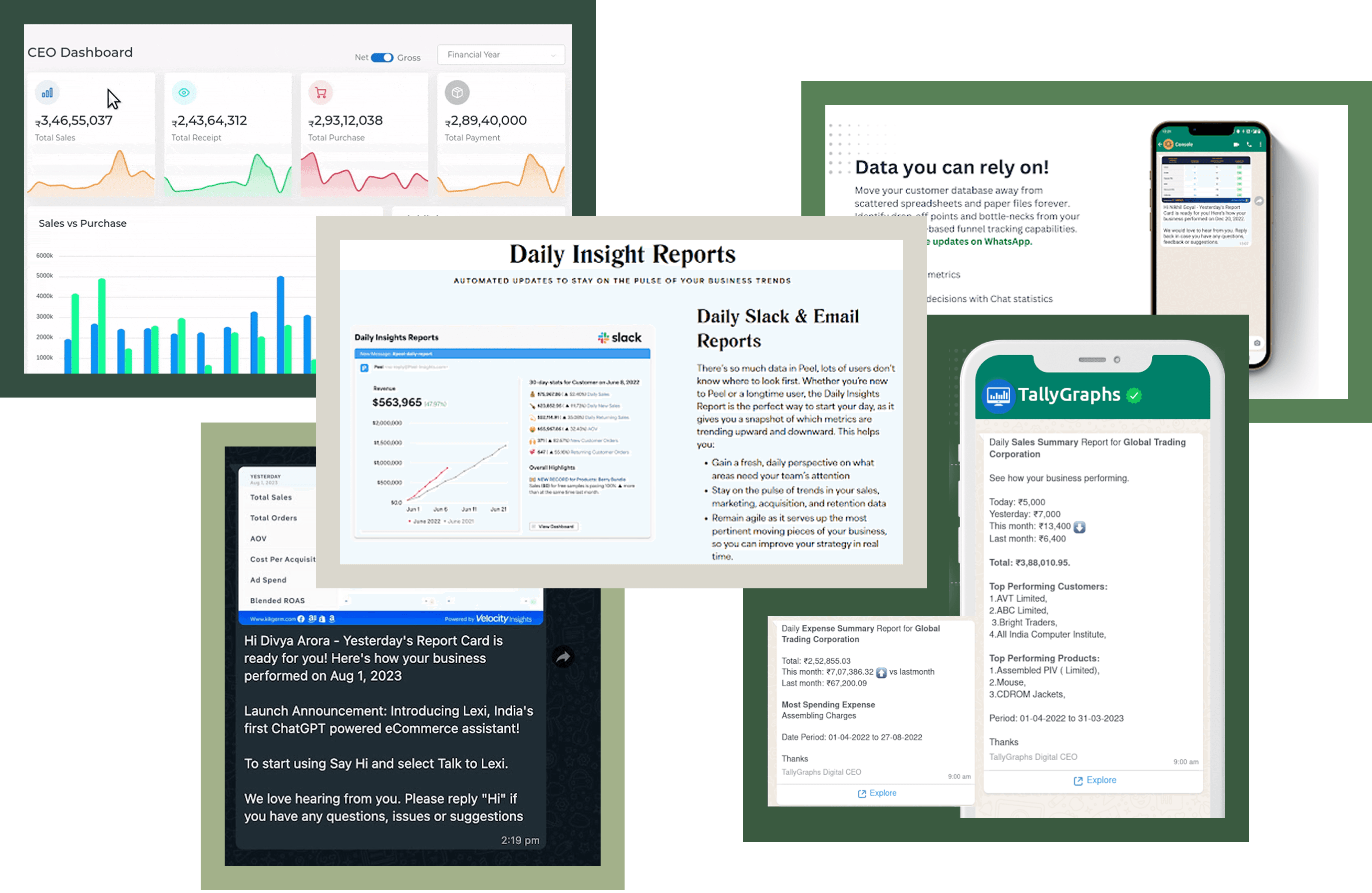
Image: Various references I had collected.
Constraints and costs
Each image had to stay under 5 MB.
WhatsApp also charged differently by template category. “Utility” was cheaper and delivered more reliably than “marketing”. Through testing we found that the category depended on the copy of the message, not the image, so I wrote the text carefully to stay in the utility class.
Each "utility" message cost ₹0.31 to send. For 400 users, the monthly cost worked out to roughly ₹3,720.
The first live draft
I created two variants:
1. Brand had a single sales channel connected (since 60% of the users back then only had Shopify connected).
2. Brands had multiple sales channels connected (Shopify + Amazon Marketplace).
Once the base report was tested, we added insights from Boost to the updates.
Scroll

Integrating it into the existing flows
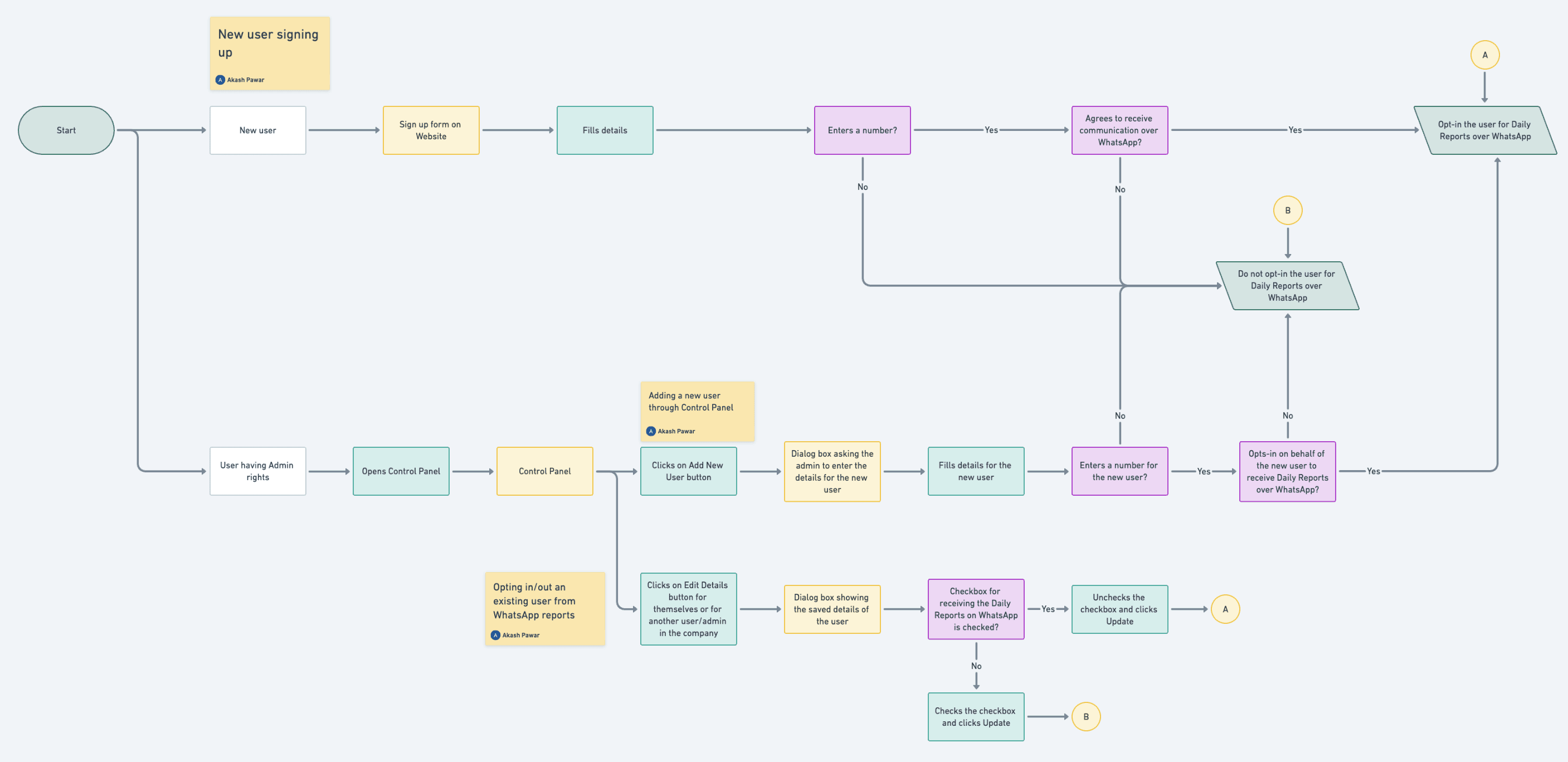
Users could turn on WhatsApp reports through the user management panel. New users could opt in while signing up.
We made sure opting out was super easy through WhatsApp itself and added checks so no messages were sent after a user had opted out.
LAST UPDATED VERSION: 30 APR, 2025
Current draft
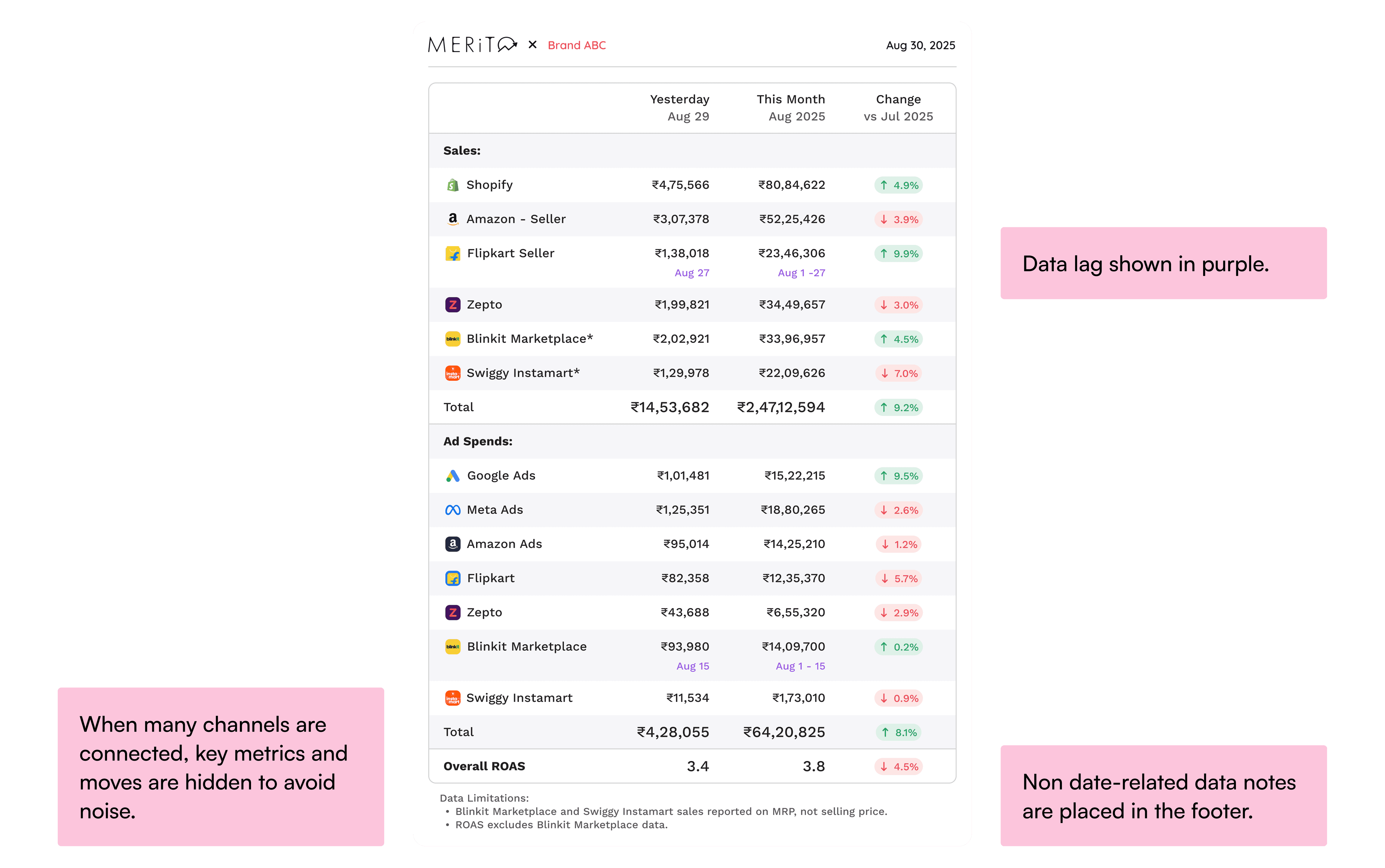
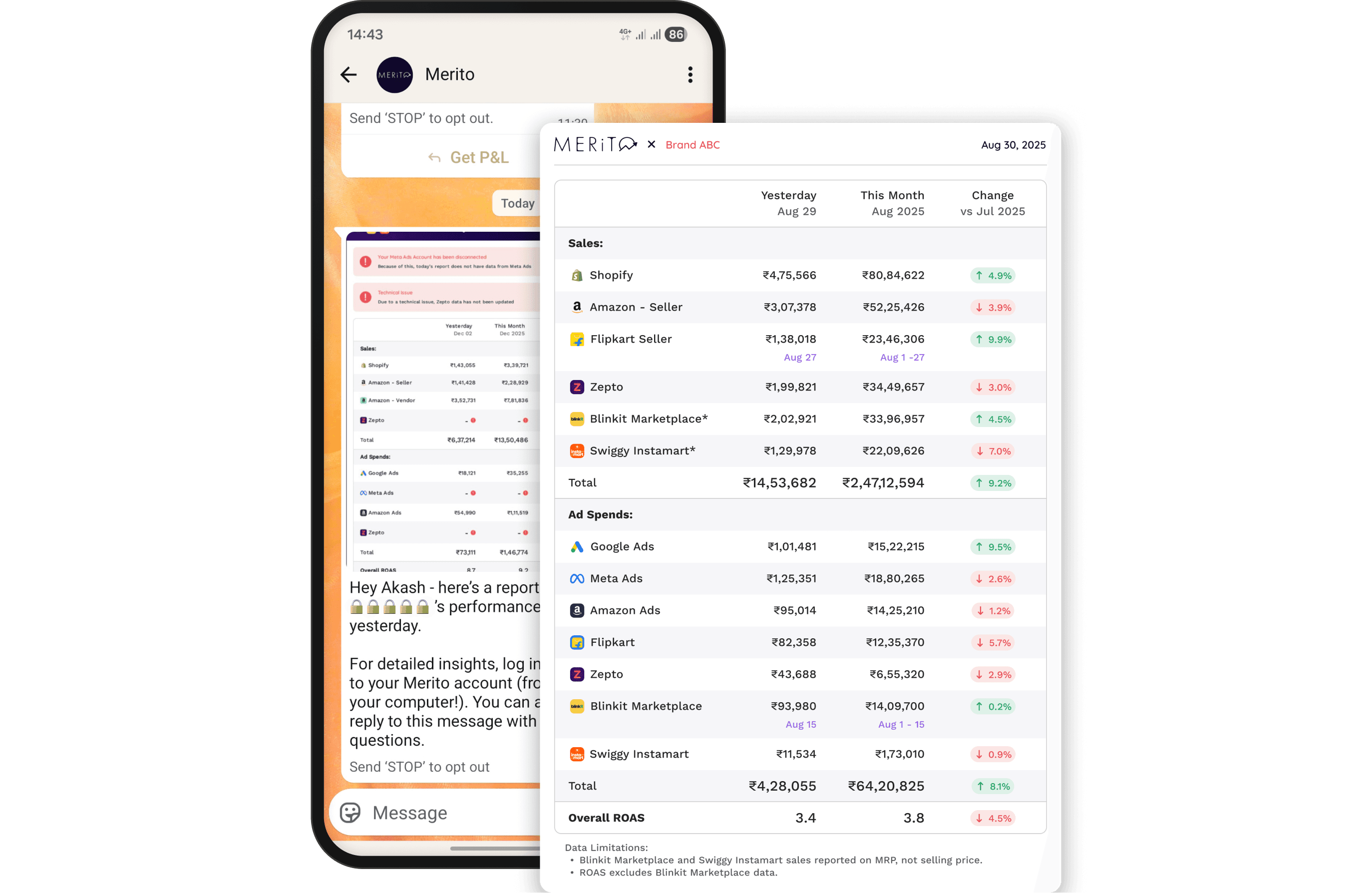
As Merito scaled and more channels were added, we needed to shift the design to accommodate more channels. I decided to shift to a more P&L like report that could easily report the major sales and ads figure.